

In this article
This winter, CitiPower and Powercor have reported a 350 percent increase in blown service fuses across their network. The cause is straightforward: more Melbourne homes now have batteries, EV chargers and high-draw appliances than their existing electrical supply infrastructure was designed to handle.
If you have recently installed a home battery, EV charger, or both, this affects you directly. Here is what is happening, why it matters, and what you can do to prevent an unexpected power outage at your property.
What Is a Service Fuse and Why Is It Blowing?
Your service fuse is the main fuse on the supply side of your electricity connection. It sits between the street network and your property’s switchboard. In most Melbourne homes, the service fuse is rated at 50 amps, which was adequate when households ran lights, a hot water system, a stove and a few power points.
The problem is that household electricity demand has changed significantly. A home battery system drawing from the grid can pull 5kW or more. An EV charger running at 7kW adds another 30 amps. Electric heating, cooking, and hot water can easily consume another 20 to 30 amps. When these loads run simultaneously, the total demand exceeds what a 50-amp service fuse can handle, and the fuse blows.
The result is a complete power outage at your property until the fuse is replaced.
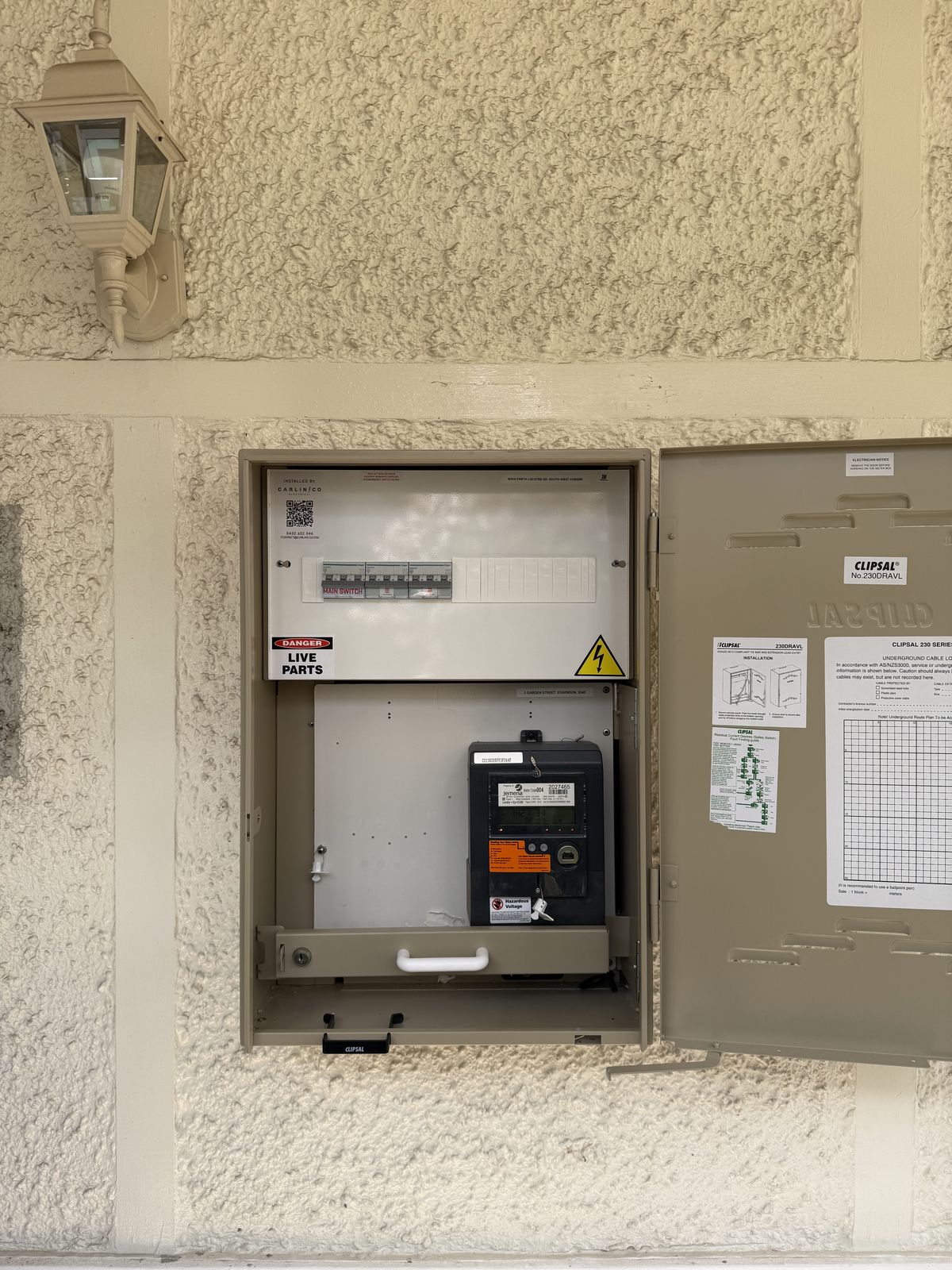
A meter box and switchboard assessed during a Carlin Co mains upgrade in Melbourne.
The Free Power Hours Are Making It Worse
The Victorian Midday Power Saver gives households free electricity between 11am and 2pm. This is a great benefit, but it has created a new pattern: households are concentrating their heaviest energy use into the same three-hour window to maximise their savings.
Running the dishwasher, washing machine, dryer, pool pump, EV charger and battery charging all at the same time during free hours puts enormous demand on your service fuse. If that fuse is still rated at 50 amps, it may not cope.
CitiPower and Powercor have specifically identified this concentrated usage pattern as a major driver of the increase in blown fuses.
A Common Installation Mistake
One issue the distributors have flagged is that during some battery and EV charger installations, the property’s main circuit breaker is upgraded to a higher rating to support the new equipment, but the service fuse is not upgraded to match.
This creates a dangerous mismatch. The main circuit breaker allows more current through to the property, but the service fuse upstream cannot handle it. The fuse becomes the weak point in the chain and eventually blows under heavy load.
This is why it matters who installs your battery or EV charger. A thorough installer will assess your entire supply chain, from the service fuse through the consumer mains cable to the main circuit breaker, before commissioning any new equipment. An installer who only looks at the switchboard and ignores the supply side is leaving you exposed to exactly this problem.
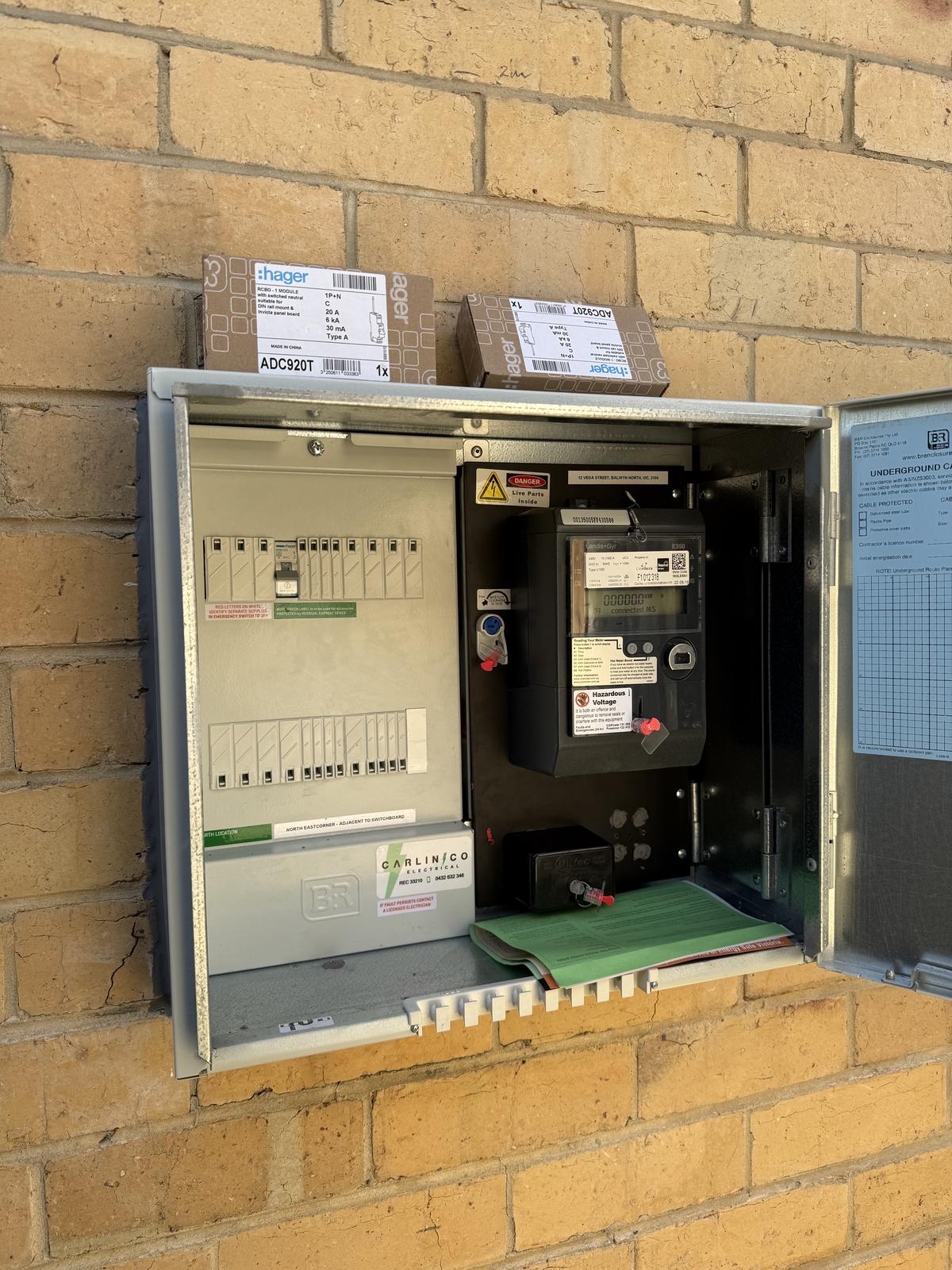
A three-phase switchboard upgrade completed by Carlin Co, ensuring the full supply chain is rated for modern energy loads.
What Should Be Checked Before Any Battery or EV Charger Installation
Before installing a home battery or EV charger, a licensed electrician should assess the full supply path:
- Service fuse rating. Typically 50A in older Melbourne homes. Only a licensed electrician can remove and check a service fuse, following the VESI Fuse Removal and Reinsertion Code of Practice.
- Consumer mains cable capacity. The cable between the service fuse and the switchboard must be rated to carry the total expected load. Older properties often have undersized consumer mains.
- Main circuit breaker rating. This must be appropriate for both the service fuse and the cable, not upgraded beyond what they can support.
- Total concurrent demand. The installer should calculate your total possible draw when all major appliances, the battery and the EV charger are running simultaneously, including during free power hours when you are likely to concentrate usage.
What Can Be Done to Fix or Prevent the Problem
Depending on what the assessment reveals, one or more of the following may be needed:
1. Set an Import Limit on Your Battery Inverter
Most modern battery systems, including Sigenergy, Tesla Powerwall and Sungrow, allow the installer to set an import limit through the manufacturer’s app. This caps how much power the battery draws from the grid, keeping total demand within the service fuse’s capacity. This is often the simplest and cheapest fix.
2. Adjust Your EV Charging Rate
Rather than charging at the maximum 7kW (32A), you can set a lower charging rate that fits within your available supply capacity. Most smart EV chargers support this through their app. Charging at 5kW instead of 7kW still adds roughly 70km of range during the three-hour free window.
3. Upgrade the Consumer Mains Cable and Main Circuit Breaker
If the cable between your meter and switchboard is undersized, it needs to be upgraded. This is internal work that your electrician handles directly.
4. Upgrade Your Supply
If your service fuse is the bottleneck, a supply upgrade from CitiPower or Powercor may be required. This can mean a higher-rated service fuse or, for properties with significant demand, an upgrade to three-phase power. Your electrician submits the application to the distributor on your behalf.
5. Spread Your Energy Use
As a short-term measure, avoid running all heavy loads simultaneously during free power hours. Stagger your EV charging, battery charging and high-draw appliances across the day. This is a workaround, not a permanent solution, but it reduces the risk of blowing a fuse while you arrange any necessary upgrades.
Already Had a Blown Fuse? What to Do
If your property has lost power due to a blown service fuse, contact your electricity distributor (CitiPower or Powercor in most of inner Melbourne) to have the fuse replaced. Then have your electrical installation inspected by a licensed electrician to identify why the fuse blew and prevent it from happening again.
The inspection should cover all the points listed above. If you have a battery or EV charger installed, it is very likely that the supply infrastructure needs to be upgraded or the equipment settings need to be adjusted.
Frequently Asked Questions
Why are service fuses blowing more often in Melbourne?
CitiPower and Powercor report a 350 percent increase in blown service fuses this winter. The main causes are home batteries, EV chargers and concentrated electricity use during free power hours exceeding the capacity of existing 50-amp service fuses.
Can the free power hours cause a blown service fuse?
Yes. Running multiple high-draw appliances simultaneously during the free 11am to 2pm window can exceed the 50-amp service fuse rating and cause it to blow.
How do I know if my service fuse needs upgrading?
A licensed electrician can check your service fuse rating and calculate your total concurrent demand. If your combined load from batteries, EV charger and appliances exceeds the fuse rating, an upgrade or import limit adjustment is needed.
What is an import limit on a battery inverter?
An import limit caps how much power your battery system draws from the grid at any one time. Setting this limit ensures your total household demand stays within the capacity of your service fuse, preventing it from blowing.
Who is responsible for upgrading a service fuse?
Service fuse upgrades are done by your electricity distributor (CitiPower or Powercor in inner Melbourne). Your electrician submits the application on your behalf and coordinates the upgrade.
Get Your Supply Checked
If you have a battery, EV charger, or both, and have not had your service fuse and consumer mains assessed, now is the time. Carlin Co Electrical checks the full supply chain on every installation.
REC Licence 33210 | Carlin Co Electrical | Port Melbourne VIC 3207
Need an Electrician in Melbourne?
Carlin Co Electrical services all of Melbourne with licensed, insured electricians.
Get a Free QuoteOur Services