

ELECTRICAL SAFETY
RCD Installation
Residual current devices protect against electric shock by detecting current leakage and cutting power in milliseconds. We install, test, and upgrade RCDs to meet current electrical safety standards across Melbourne homes and businesses.
RCD Services
An RCD monitors the current flowing through a circuit and trips if it detects a difference between the active and neutral conductors. That difference means current is leaking to earth, often through a person. A properly rated RCD will disconnect the supply in under 30 milliseconds.
New RCD Installation
We install RCDs in switchboards that currently have none, or that only have partial coverage. Current wiring rules require RCD protection on all final subcircuits in domestic installations, including lighting, power, and fixed appliance circuits. We fit the appropriate type and rating for each circuit.
RCD Replacement and Upgrades
RCDs have a finite lifespan and can degrade over time. If an RCD is failing to trip within specification during testing, or if it trips nuisance-frequently, it needs replacing. We also upgrade older single-pole RCDs to modern RCBO units that combine circuit breaker and RCD protection in a single device.
RCD Testing
Regular testing confirms your RCDs will operate when needed. We use calibrated test instruments to verify trip times at rated and higher fault currents. For rental properties, RCD testing is a regulatory requirement as part of the electrical safety check. Testing takes only a few minutes per device.
Nuisance Tripping Resolution
If your RCD trips frequently without an obvious fault, the issue could be cumulative leakage from multiple appliances on the same circuit, a faulty appliance, or deteriorating wiring. We use fault-finding techniques to isolate the source and resolve the problem, which may involve redistributing circuits across multiple RCDs to reduce cumulative leakage.
RCDs are the single most effective protection against electric shock in your home. If your switchboard does not have them, or they have never been tested, get in touch.
Types of RCD Protection
Switchboard RCD
A dedicated RCD module mounted in the switchboard that protects a group of circuits. This is the most common configuration and allows multiple circuits to share one RCD. The trade-off is that a fault on one circuit will trip the RCD and cut power to all circuits it protects.
RCBO
A combined RCD and circuit breaker in a single device. Each circuit gets its own individual RCD protection, so a fault on one circuit only trips that circuit. This is the preferred configuration for new installations and switchboard upgrades because it eliminates nuisance cross-tripping.
Portable RCD
Plug-in RCDs that fit into a standard power point outlet. These are a secondary layer of protection for specific situations like outdoor power tool use. They do not replace switchboard-mounted RCDs but provide additional protection where the risk of shock is elevated.
138+
Google Reviews
5.0
Average Rating
REC 33210
Registered
Melbourne
Wide Service
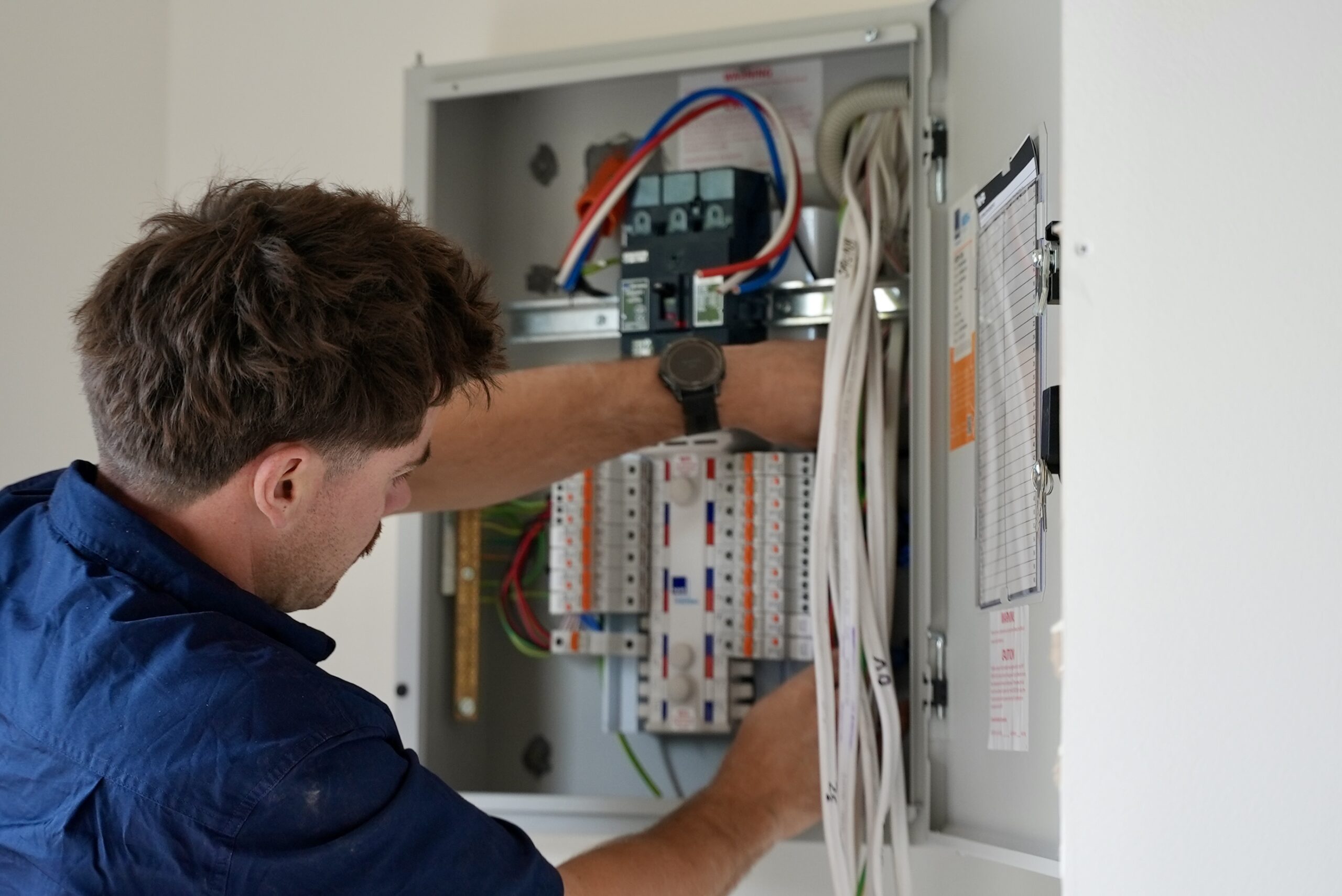
Switchboard upgrade in progress – Melbourne electrician replacing old fuse board
RCD FAQs
What is the difference between an RCD and a circuit breaker?
A circuit breaker protects against overcurrent and short circuits by tripping when too much current flows through a conductor. An RCD protects against electric shock by detecting current leakage to earth. They protect against different hazards, which is why modern switchboards have both.
How often should RCDs be tested?
You should press the test button on your RCD every three months to verify it trips. Professional testing with calibrated instruments should be done every 12 months for rental properties and at least every two years for owner-occupied homes. Professional testing measures the actual trip time, not just whether the device trips.
Why does my RCD keep tripping?
Common causes include a faulty appliance, moisture ingress into an outdoor fitting, deteriorating wiring insulation, or cumulative leakage from too many appliances on the same RCD. We can isolate the cause using fault-finding techniques and resolve the issue permanently.
Is RCD protection mandatory in Victoria?
Current wiring rules (AS/NZS 3000) require RCD protection on all final subcircuits in new domestic installations. For existing homes, RCDs are required on any new or altered circuits. Rental properties must have at least two RCDs protecting all power and lighting circuits under the Residential Tenancies Regulations.
RCD Installation Across Melbourne
We install and test RCDs across all Melbourne suburbs. See also our safety switch installation, switchboard upgrades, and compliance testing services.